
How to Condition and Care for Leather Furniture

How to Condition and Care for Leather Furniture
Leather Conditioner for Sofas, Chairs and Furniture
Leather sofas, chairs and other furniture can last for many years, but regular conditioning helps keep the leather soft, supple and protected.
In this guide, we explain when leather furniture needs conditioning, how often to condition it, which types of leather can be treated and how to apply leather conditioner correctly.
Why does leather furniture need conditioning?
Leather is a natural material and, over time, everyday use and its surroundings can affect how it looks and feels.
Leather sofas and chairs are exposed to body heat, friction, sunlight, central heating and changes in temperature and humidity. Over time, the leather can begin to feel drier, lose some of its suppleness and show more visible signs of wear.
A good leather conditioner helps replenish the leather and maintain its flexibility while helping to protect the surface from everyday use.
Regular conditioning is particularly worthwhile with furniture because sofas and chairs are used repeatedly in the same areas. Seat cushions, armrests and headrests often show signs of wear before less frequently touched areas.
How do you know when a leather sofa needs conditioning?

Your leather furniture does not need to follow a rigid conditioning schedule. The condition of the leather itself is usually the better guide.
Leather that begins to feel drier, look duller or lose some of its usual softness and suppleness may be ready for conditioning.
Conditioning before the leather becomes excessively dry is preferable to waiting until it is badly worn.
See the difference regular leather care can make
Regular conditioning can make a noticeable difference to leather that has started to look dry, dull or tired.
The aim is not to make older leather look artificially new. Good leather develops character with age. Conditioning helps restore suppleness, improve its appearance and protect the surface from further everyday wear.


How often should you condition a leather sofa?
There is no fixed schedule that works for every piece of leather furniture.
For most suitable leather sofas and chairs, conditioning once or twice a year can be a useful starting point, but how often your furniture needs attention will depend on how it is used and where it is kept.
A sofa used every day may need conditioning more frequently than an occasional chair. Heat from radiators or wood burners, direct sunlight and a warm, dry room can also cause leather to dry more quickly.
The best guide is the leather itself. If it still feels soft and supple, there is no need to condition it simply because a certain amount of time has passed.
How to condition a leather sofa or chair
Before you begin, make sure your furniture is made from a type of leather suitable for conditioning. If you are unsure, check the manufacturer's care instructions before applying anything.

Clean if needed
Remove dust and surface dirt before conditioning. If the leather needs a more thorough clean, use a suitable leather cleaner and allow it to dry fully before applying conditioner.
For the full cleaning method, read our guide to how to clean a leather sofa.

Patch test first
Always test the conditioner on a small, inconspicuous area first. Allow the test area to settle and check that you are happy with the finish before treating the rest of the furniture.

Apply the Leather Balsam
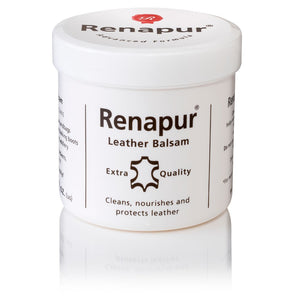
Renapur Leather Balsam is concentrated, so only a small amount is needed. Work the Balsam into the application sponge first, then apply a thin, even layer using gentle circular movements.
Work section by section rather than trying to cover the whole sofa or chair at once.

Ready to go
Once applied correctly, the leather should not be left feeling greasy or sticky. If too much product has been applied, remove any excess with a clean, soft cloth.
Your furniture can then be used as normal.
Good to know
If you accidentally apply too much Renapur Leather Balsam, there is no need to worry. Simply buff away any excess with a clean, dry cloth.
Renapur Leather Balsam is suitable for many types of smooth leather, but should not be used on suede, nubuck or fully aniline leather. If you are unsure about your particular leather, always check the manufacturer's care instructions and test on a small, inconspicuous area first.
How Often Should You Condition Leather Furniture?
For most leather sofas and chairs, conditioning every 6 to 12 months is a sensible starting point. However, how often your furniture needs attention will depend on how and where it is used.

Everyday use
A sofa used daily may begin to feel dry sooner than furniture that is only occasionally used.

Heat and sunlight
Regular sunlight, central heating and nearby radiators can cause leather to lose moisture more quickly.

Let the leather guide you
If the surface begins to feel dry, look dull or lose some of its natural suppleness, it may be time for another light application.
Leather Conditioner for Sofas, Chairs and More
Renapur Leather Balsam has been used to care for leather for over 30 years.
Made with beeswax, carnauba wax, jojoba oil and avocado oil, it is designed to condition and protect suitable smooth leather. Only a small amount is needed, making it particularly practical for larger items such as leather sofas and armchairs.



Leather Furniture Conditioning FAQs
What is the best leather conditioner for a sofa?
The best leather conditioner for a sofa is one that is suitable for your type of leather, easy to apply evenly and helps keep the leather supple and protected. Renapur Leather Balsam is designed for suitable smooth leather and contains beeswax, carnauba wax, jojoba oil and avocado oil. A small amount goes a long way, making it particularly practical for larger leather items such as sofas and armchairs.
How do you condition a leather sofa?
Apply a small amount of Renapur Leather Balsam with the supplied sponge, working it evenly across the leather. Use the balsam sparingly and buff away any excess with a clean, dry cloth if needed.
How often should you condition a leather sofa?
For most leather sofas, conditioning every 6 to 12 months is a useful starting point. Furniture that is used frequently or exposed to regular sunlight or central heating may benefit from attention sooner. The leather itself is the best guide, particularly if it begins to feel dry or lose some of its natural suppleness.
Should you clean a leather sofa before conditioning it?
If your sofa has visible dirt, dust or everyday grime, it is best to clean the leather before applying conditioner. Renapur Leather Cleaner Spray is a gentle, pH-neutral cleaner designed for suitable leather surfaces and can be used to prepare the leather before conditioning. Allow the leather to dry fully before applying Renapur Leather Balsam. Starting with a clean surface helps the balsam spread evenly and gives a more consistent finish.
Can leather conditioner darken a sofa?
Renapur Leather Balsam may initially deepen the colour of some leather as it is absorbed, particularly on more absorbent finishes. In most cases, the leather will lighten again as the balsam settles and dries. We recommend testing a small, inconspicuous area first and allowing it to dry fully before treating the rest of the sofa.
How much leather conditioner should you use on a sofa?
You only need a small amount. Apply Renapur Leather Balsam sparingly and work it evenly into the leather rather than loading the surface with product. You can always apply a little more where needed, and any excess can simply be buffed away with a clean, dry cloth.
What does leather conditioner do for a sofa?
Leather conditioner helps replenish and maintain suitable leather, keeping it feeling supple and helping protect it from the drying effects of everyday use. Regular care can also help maintain the leather's appearance and natural finish, particularly on furniture that is used frequently.
Here we look specifically at how to care for leather furniture, how to tell when it needs conditioning and the best way to apply leather conditioner. For more general advice on choosing and using leather conditioner, you can also read our Complete Guide to Leather Conditioner.